
WageIndicator Foundation increases transparency about work and income worldwide. Martijn Arets of The Gig Work Podcast speaks to co-founder Paulien Osse about the successes, challenges and goals of this unusual organisation.
Once you are familiar with the WageIndicator Foundation, you will see its work everywhere. For almost 25 years, this foundation has been working from the conviction that all workers, employers and institutions should have access to the right information about income and rights. WageIndicator is committed to the belief that transparency leads to fairer incomes and good working conditions.
WageIndicator is an international organisation for which hundreds of people work. They all do so remotely from their native countries. They collect, analyse and share information on wages, minimum wage, living wage, living income, living tariff, labour laws, gig and platform work, collective agreements (CBAs) and much more. What started with an inclusive online Loonwijzer in the Netherlands has grown to more than 200 websites with labour market information across 208 countries. By 2021, the websites together had more than 40 million visitors.
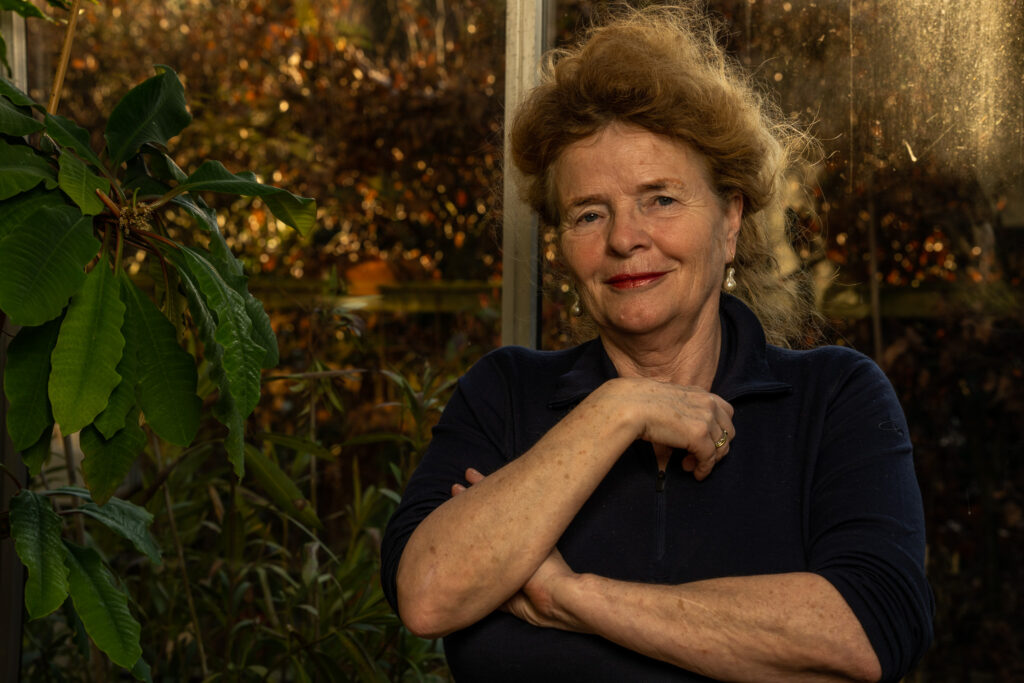
At her home in Bussum, I meet Paulien Osse, the co-founder of this extraordinary organisation. In the latest episode of The Gig Work Podcast, she tells the story of this quirky organisation.
Salary check only for white men: ‘Could be better’
Osse is a journalist by origin. Early in her career, she wrote mostly about poetry, literature and theatre; later she found socio-economic topics more interesting. She travelled the world in search of stories, especially in Southern Africa, Latin America and Turkey. The wage gap between men and women was much wider 25 years ago than now, Osse says. “I always got less for a story or photo than male journalists,” she says. “And in the countries I visited, the inequality was even worse.”
The inspiration for Loonwijzer came from Intermediair’s existing Salary Compass in the Netherlands. “At the time, that was really only applicable to white middle-class men,” Osse says. “That could be better.”
At the time, she was working for the Dutch trade union FNV on a membership information website. She convinced the union that an inclusive salary check was a good fit for it. Together with scientist Kea Tijdens from the University of Amsterdam, she collected data and built Vrouwenloonwijzer.nl. Later it became Loonwijzer.nl, a website with work and wage information for everyone. Because the loonwijzer is only good and could grow independently, they thought it smarter to develop it further in a separate foundation outside the union.
‘Almost’ worldwide
“We now have websites in hundreds of countries,” Osse says. She is strict on the facts: WageIndicator Foundation operates ‘almost’ worldwide. Only a few countries are still missing. “Growing was not easy, as we had no money for a long time,” she says. “We were often tipped to focus on richer countries, where we would find lenders more easily. But that was exactly what we did not want, and I am glad we always stuck to that point of view. After all, even in poor countries, people need information on income and labour law.”
WageIndicator even has information on North Korea and all regions of China and Russia, she proudly explains. “We really want to be inclusive, we mean it.”
How do you build such a huge international network? Osse gets that question often and she has no golden tip. It almost came naturally, she says. “I was an international journalist so I already had a network in several countries. The university and the unions brought their own international contacts.”
‘We don’t have to see and smell each other’
People love working for WageIndicator and those who start working for the foundation once stay involved for a long time. There are nearly 300 employees working in more than 100 countries. It is a mix of full-timers, part-timers and students. There is no bureaucracy, and the input of interns is valued as much as that of veterans.
I can agree that it is a fun, quirky organisation, as I have been part of the team for over two years now. “There is a creative atmosphere,” says Osse. “Everyone loves making and working together. If you want help or information, you get a quick response.” Everyone works remotely and perhaps that is the secret, says Osse. “We don’t have to see and smell each other. As a result, maybe we tolerate and appreciate our colleagues longer.”
From minimum to living wage
WageIndicator started with information on salary, labour laws and minimum wage. But for some 80% of the world’s population, a minimum wage is not enough to live on, Osse knows. That is why, since 2014, the organisation also publishes the living wage or ‘living wage’. “That is the income someone needs to have a house, enough to eat and maybe a bicycle,” she says. “It is the minimum salary for a decent living.”
But not everyone gets a salary from a boss. That is why WageIndicator also calculates a “living income”, a living wage for entrepreneurial families who own a shop or farm, for example.
Third category: living tariff for platform workers
“Besides employees and entrepreneurs, there is another growing group of workers: gig workers or platform workers,” says Osse. “They do not work for a permanent employer, but they are not traditional entrepreneurs either. They work by the minute or by the hour, rather than by the month. With their way of working comes another kind of income: the ‘living tariff'”
Platform companies themselves came to WageIndicator asking for a living tariff, Osse says. “They want to pay decently, but didn’t know how to do it. It is also more complicated than calculating a living wage. What a minimum livable hourly rate is varies from person to person and situation to situation. It has to do with factors such as type of work, number of workable hours, pension and necessities such as a bike, laptop or computer.”
‘The joy is in the creation’
WageIndicator developed the living tariff for the Dutch market and is now developing it together with German GIZ for Indonesia, Pakistan and Kenya. “We especially want to investigate under which conditions such a rate is usable for workers and platform companies,” says Osse. We aim to publish a living tariff for 155 countries by the end of this year.”
Osse stresses that the information on living wages, income and tariffs does not necessarily stem from a mission to improve the world. “The joy is creation. We want to create something useful of good quality. If by doing so we help people on their way to fair remuneration, that’s cool.”
‘Not all platform workers are badly off’
Osse has a clear vision of the political debate on self-employed workers and platform work. “The government and unions are trying to force platform workers into a straitjacket, but that is not the solution,” she says. “Not all platforms are crooks and not all platform workers are badly off. Just really listen to them. They don’t want to be employed, they want freedom to work where, for whom and when they want. Help them with measures to match that.” She hopes the living tariff can contribute to the political debate.
I am working on this project and I expect even greater impact from this project outside than within the platform economy in the end. Platforms tend to ‘formalise’ an existing market like home cleaning and delivery. With this, this rate is also applicable to a huge group of workers who do not work through platforms. After all, for a rate, how client and contractor find each other is irrelevant.
Conclusion
WageIndicator’s story is inspiring in many ways. The foundation is all about serious business – data and income. That requires a solid structure, but it is not hierarchical or rigid. Cooperation is creative, enjoyable and there is plenty of room for initiative. The solid structure behind the scenes actually allows for experimentation.
While many organisations wait to innovate until someone else says it is allowed or pays the bill, WageIndicator works the other way round. The foundation has found a way to develop new projects in such a way that they contribute to the big picture and in turn generate new commissions and collaborations. This unusual way of working attracts the very attention of partners who fit the foundation.
WageIndicator is ambitious and down-to-earth. Everyone still works with one goal: transparency for workers, employers and policymakers worldwide. A topic that is more than relevant in the current labour market debate.
