
Good day!
The new year has just begun: a good reason to look back and look ahead. It was another wonderful year, in which my work took me to beautiful places (Nairobi, Geneva, Leuven, Paris, Bologna), I learned a lot and shared lessons via content, I had my first mini photo exhibition, got married, started part-time at the Amsterdam University of Applied Sciences, and was able to work with inspiring people all over the world (online).
In this first newsletter of the year, I look back on what kept me busy in 2025 and look ahead to where my focus will lie in 2026.
Best wishes and on to a happy and healthy 2026,
Martijn
What I do
It is always difficult to give a comprehensive answer to the question “what kind of work do you actually do?”. I describe myself as an independent researcher, platform economy expert and professional outsider. I focus on issues related to the impact of technology and platforms on people, work and society. I do this with all stakeholders, often in the role of bridge builder. On a national level and increasingly on a global level. And above all: independently.
Although I take a broad view of platform developments (and often AI developments, because they follow a similar path), there is an increasing “focus” in my work. The topics that received the most attention in 2025 were:
- ownership and governance – also based on my research into platform cooperatives and interest in models such as the Steward Ownership Model. This topic also includes power and countervailing power: an extremely relevant and interesting topic in the world of platforms and technology;
- data portability – where I use my GigCV project as a vehicle to validate, investigate and agenda setting;
- fair conditions/pay – because this is a basic requirement that simply has to be there. A basic requirement that is often swept under the carpet with the excuse of innovation or “magic” (in the case of AI).
And of course, in addition to these main topics, there are plenty of other topics that also interest me: curiosity (and common sense) is my starting point for everything, and I am apparently a very curious person 😉
What I published in 2025
Developing DAC7: 5 lessons for the workable regulation of the platform economy.
Since 2023, platforms have had to share supplier data with tax authorities. What are the implications of this legislation? How can we achieve better regulation? In this blog I share, together with Ahmed Darwish, our lessons.
Reclaiming the value of work in the digital economy: A report from an inspiring conference in Leuven.
The growing impact of digital technology, generative AI and algorithmic management on work is an increasingly widely explored topic. Last week during the two-day conference ‘Future of Work: Reclaiming the value of work in the digital economy’, researchers from across Europe gathered to present their work and exchange views.
It was organised by both the research group of the ERC project ‘Respect Me “ and the European Trade Union Institute” (ETUI). In this blog, I look back at the discussions and my own contribution on an upcoming paper on the Living Tariff methodology.
Ghostwork: the invisible world of work behind AI
Claartje ter Hoeven (Utrecht University) and her research team reveal the hidden world of European data or ghostworkers. They are often highly educated, seeking flexibility, but their working conditions are usually poor.What drives them? What impact do they have on algorithm development, and vice versa?
The myth of automation: How AI is and will remain dependent on cheap labour
Artificial intelligence (AI) is and will remain dependent on human labour. The people who do the work behind AI systems are often invisible. This carries risks of poor working conditions, low wages and inadequate protection for workers. How does this situation arise, and how can we ensure that the many invisible data workers also benefit from technological developments? For the WageIndicator Foundation‘s Gig Work Podcast, I spoke with Professor Antonio Casilli (Institut Polytechnique de Paris), author of the book Waiting for Robots, the Hired Hands of Automation.
Data Labelers Association speaks up for invisible workers: “Ultimately, it’s about respect and human decency.”
What are the advantages, disadvantages and challenges of data work? Who are the people who annotate and correct the data behind AI (so-called “data workers” or “data labelers”)? In the previous two episodes of The Gig Work Podcast, I spoke with researchers Claartje ter Hoeven and Antonio Casilli about this topic. But if you really want to know what it’s like to train AI with data, it’s best to ask the workers themselves. That’s why I visited Ephantus Kanyugi (30) in Nairobi. He is a data labeller himself and a pioneer for the labour rights of his colleagues in Kenya.
Data as the gateway to financial services for platform workers
Rollee makes it easier for platform workers to access financing. Until now, it has been difficult to obtain a loan without a steady monthly income. Lenders want a clear picture of income in order to calculate a credit score. Rollee unlocks data from platforms, banks, tax portals and other relevant data sources for lenders. This should lead to fair access to financial services for all workers, says founder Ali Hamriti in this episode of The Gig Work Podcast by the WageIndicator Foundation.
From Bologna to Big Tech: critical lessons about data work and AI
Last week, the 8th conference of the ‘International Network of Digital Labor’ took place in Bologna. This network’s mission is to research and discuss aspects of work in the digital age. I traveled to Bologna by train to attend the conference and present my research on GigCV and data portability for platform workers, which I am conducting at the Amsterdam University of Applied Sciences. During the conference, there was a lot of talk about data work(ers), the gig economy, and a broader discussion about the impact of technology on work. In this blog, I share my insights and thoughts. In my story, I choose to focus on data work and the labor behind AI. Because this issue brings together all the challenges of an imbalance of power in the world of technology, especially from the perspective of the “Big Tech” platforms and mentality.
Survival versus perspective? ‘It’s not about money, but about taking responsibility’
n the discussion about platform work, I keep bumping into a big dilemma. Online platforms offer a fast -access solution for work and income in the short term. At the same time, they often fall short in providing good working conditions, sustainable careers, and future perspectives. In my opinion, this tension is the most important challenge for the future of work. How do we solve it?
Frida Mwangi knows all about it. She made the transition from housewife to platform worker, and then went on to become an entrepreneur and union leader. As a founding member of the Kenya Union of Gig Workers (KUGWO), she champions the rights of Kenyan platform workers. Her lessons are relevant not only for Kenya, but for the platform economy worldwide. I spoke to her for a new episode of The Gig Work Podcast by the WageIndicator Foundation during my visit to Nairobi, Kenya.
What projects kept me busy in 2025?
To give you some insight into what I actually do, here is a rough and certainly incomplete overview of my projects in 2025.
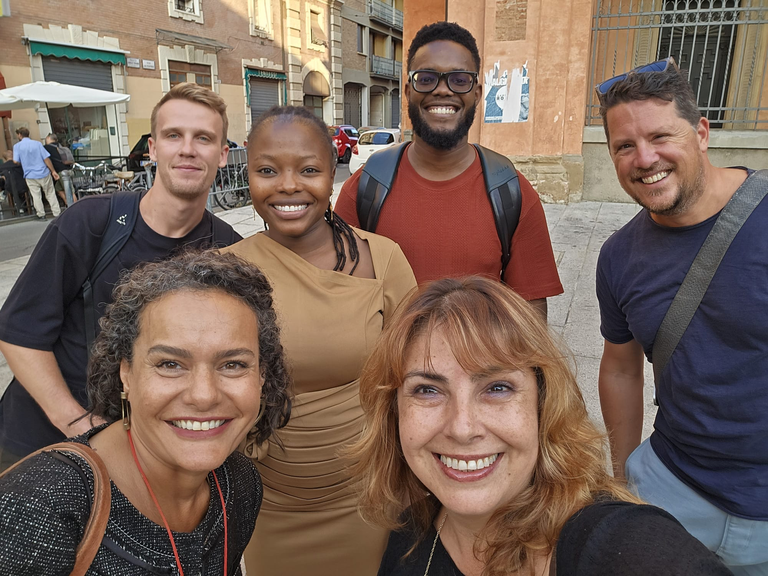
- Amsterdam University of Applied Sciences – In February, I started as a part-time researcher (two days a week) at the Civic Interaction Design research group, where my focus is on data portability, bottom-up data initiatives in the platform economy, and ways in which platforms, society, and policymakers can collaborate via APIs. My research is part of the PlatWork-R research project. In 2025, the focus was mainly on writing an academic paper about the GigCV/GigCV project (which I will submit at the end of February 2026), which I also presented at various meetings, such as the conference of the International Network of Digital Labour in Bologna (read my blog) and various scientific events in the Netherlands. In addition, I was busy restructuring the documentation and workflow of GigCV and updating the GigCV API (with a shout-out to the top people at Freshheads) with various new functionalities. In addition, together with Tessa Duzee, I put the topic of “data work” on the map at the Amsterdam University of Applied Sciences by organising a public event, which was later featured in a great blog. Because exploitation in the AI supply chain must also be part of the debate on responsible AI.
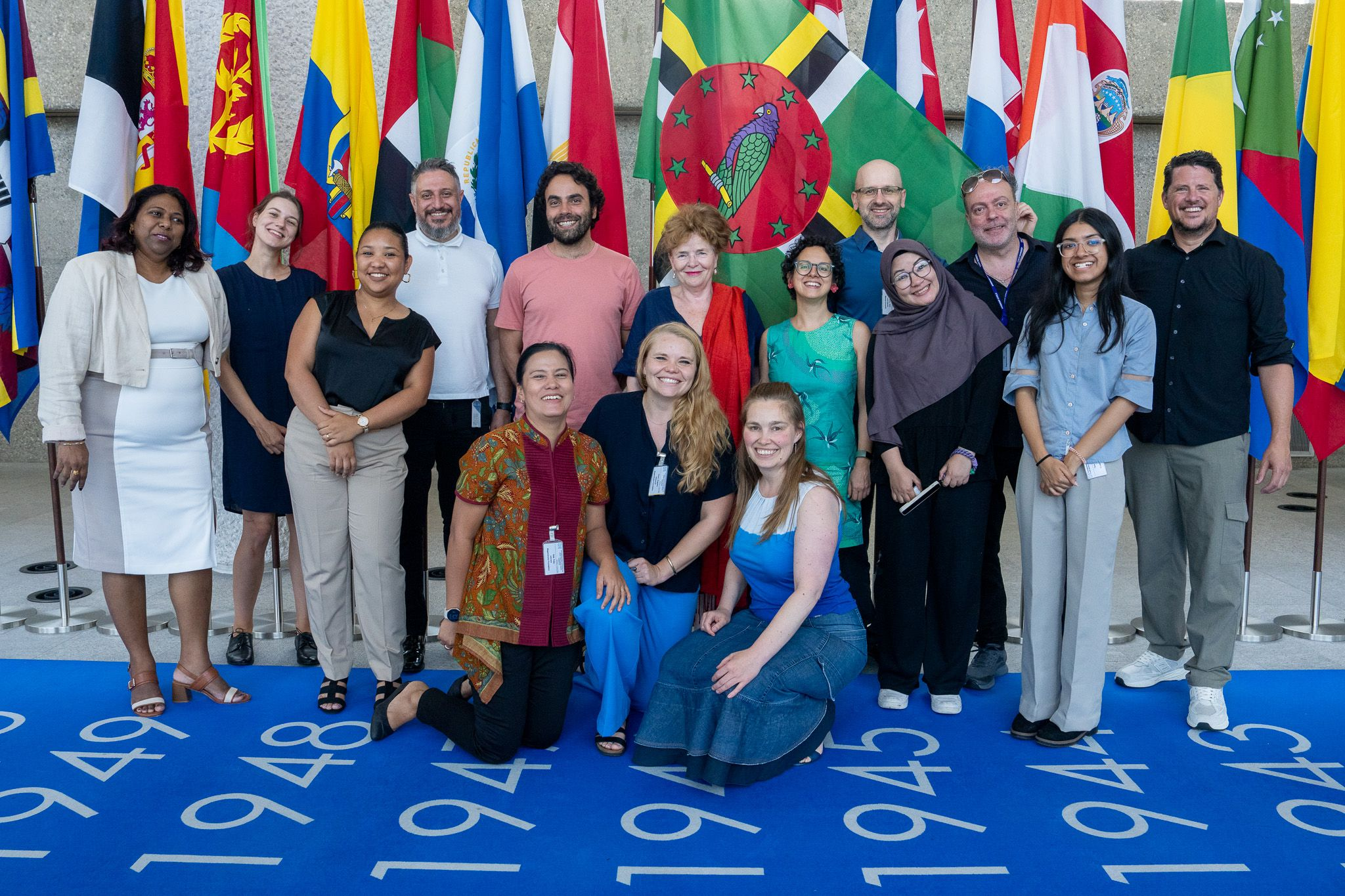
- WageIndicator Foundation – For WageIndicator, I produced several podcast episodes, wrote blogs and designed and organised two international webinars. One was about data work, the often invisible workers who prepare data for use by AI or who check AI responses. The other was about how to calculate and implement a minimum tariff for self-employed workers. A lot of work in 2025 also went into writing an academic paper (which will be submitted in january) on the Living Tariff methodology: a methodology that builds on the cost-of-living Living Wage methodology and is intended for self-employed workers. And that’s 43% (!!!!) of the working world population we’re talking about. I also presented this concept and paper at various conferences, with the presentation at the ‘9th Regulating for Decent Work Conference on “Strengthening labour institutions and worker voice to deliver decent employment”’ at the ILO in Geneva being a highlight, but I also enjoyed the two-day conference ‘Future of Work: Reclaiming the value of work in the digital economy’ (check my blog). It is extremely insightful to learn about the international world of work from this perspective.
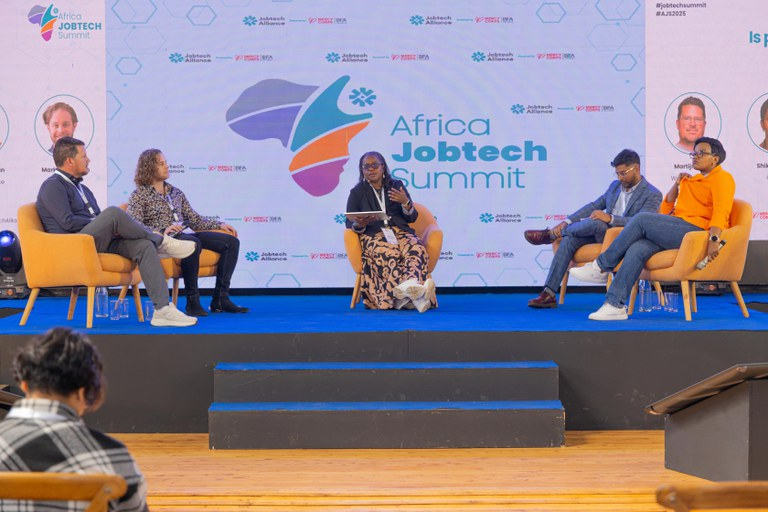
- GigCV – In addition to the research and update work I did at the Amsterdam University of Applied Sciences (HvA) on the GigCV project, in 2025 I was also busy building a network in Africa, with a focus on Kenya and Ethiopia, to engage in dialogue with platform founders about data sharing. Via a grant from the Jobtech Alliance, I am able to offer the GigCV API and everything related to it free of charge to platforms. Part of this work involved attending the Africa Jobtech Summit, where I was able to meet many founders.
- ROA/Maastricht University – Together with researchers from ROA / Maastricht University, I had the opportunity to conduct research into the motivations of freelance platform workers. We did this in collaboration with YoungOnes, where freelancers received a questionnaire (with vignette experiment) and this was combined with data from the platform. We published the initial results on Zipconomy. In 2026, a scientific paper on this research will be submitted to an academic journal.
- Presentations and advice – In 2025, I gave quite a few presentations on various (sub)topics for different types of audiences. Consultancy was on the back burner this year: my schedule was just too full for that.
In addition, there were of course the usual events to attend and discussions on many topics, both in front of and behind the scenes.
Several contributions also appeared in the media, mostly in response to events such as Amazon’s renewed focus on the Netherlands. Behind the scenes, I provided input for various reports, such as the (Dutch) TNO and IVRM report “Workers in vulnerable situations and the future, platform work in the spotlight”.
Privately, the “project” of getting married was also an important event this year. After 25 years together, we finally felt it was time to express our love for each other in this way.
Because I also reach my limits from time to time, at the end of 2025 I had to decide to discontinue my pre-master’s degree in philosophy at Tilburg University. Although everyone thought it was remarkable that I wanted to do this alongside my full-time job and family, I ultimately had to experience it for myself to come to the conclusion that it was “just” a little too much. The plan now is mainly to take more specific courses on specific topics or skills (such as statistics).
———————————————————————————————-
Looking ahead to 2026
This year, there are already a number of things in the pipeline/on the agenda. What you can expect from me in 2026:
Amsterdam University of Applied Sciences – in 2026, I will:
- Finish and submit the general paper on the GigCV project: fingers crossed!;
- Work on a survey among platform workers in different countries to research whether they want to take their data with them and, if so, which data. For example, I am working with the Data Labelers Association to learn about the wishes of this group of workers;
- Together with researchers from VU University Amsterdam, analyse data from one of the participating platforms to see what the characteristics are of workers who download their data and what the impact is of downloading data on the behaviour of workers on the platform;
- Working on the design of a MOOC on platform work.
- Thinking about a new research project, experiment or artwork on how workers and governments can influence the governance of a platform via APIs.
- Definitely focusing on topics related to governance and ownership of public platforms: one of the topics that the research group is working on.
WageIndicator Foundation – 2026 will largely be dominated by the question of how a minimum rate for self-employed gig workers can be calculated and put into practice. Six webinars and many interviews on this topic are planned. We will be talking to the initiators behind best practices around the world. The 114th International Labour Conference at the ILO in Geneva will also play a role in this exploration, as this year’s Platform Work Convention will be finalised there. The topic of pay, especially for self-employed workers, cannot be overlooked in this convention.
GigCV/GigCV – Now that GigCV is completely up to date, 2026 will be all about convincing and connecting new platforms to use the GigCV API, enabling them to easily share data with the workers who use the platform. My focus will be on Dutch platforms, platforms in Europe (first: Germany and Belgium) and platforms in Africa (via the Jobtech Alliance collaboration).
- Research collaborations – The collaboration with ROA / Maastricht University will continue for a short period in 2026 with the writing and submission of the paper. In addition, in 2026, I will mainly be talking to parties that submit large requests relating to data work, data portability and topics relating to “pay” in general, in order to keep my agenda filled for the longer term. There will also undoubtedly be some spontaneous collaborations.
- Presentations and advice – This will also continue in 2026, although I will be selective. With all the projects that are currently underway, there is only limited time left. But there is always room for really interesting presentations or interesting requests for advice that will not take weeks to complete.
This was the first newsletter of 2026. I hope I have been able to give you an overview of what has kept me busy and will continue to do so. If you have any questions or ideas, just reply to this email.
Here’s to an inspiring and healthy 2026!
Martijn
